
Financial sovereignty and authoritarian resilience in the post-Soviet space: Russia, Belarus, and Kazakhstan after 2014
Article Sidebar
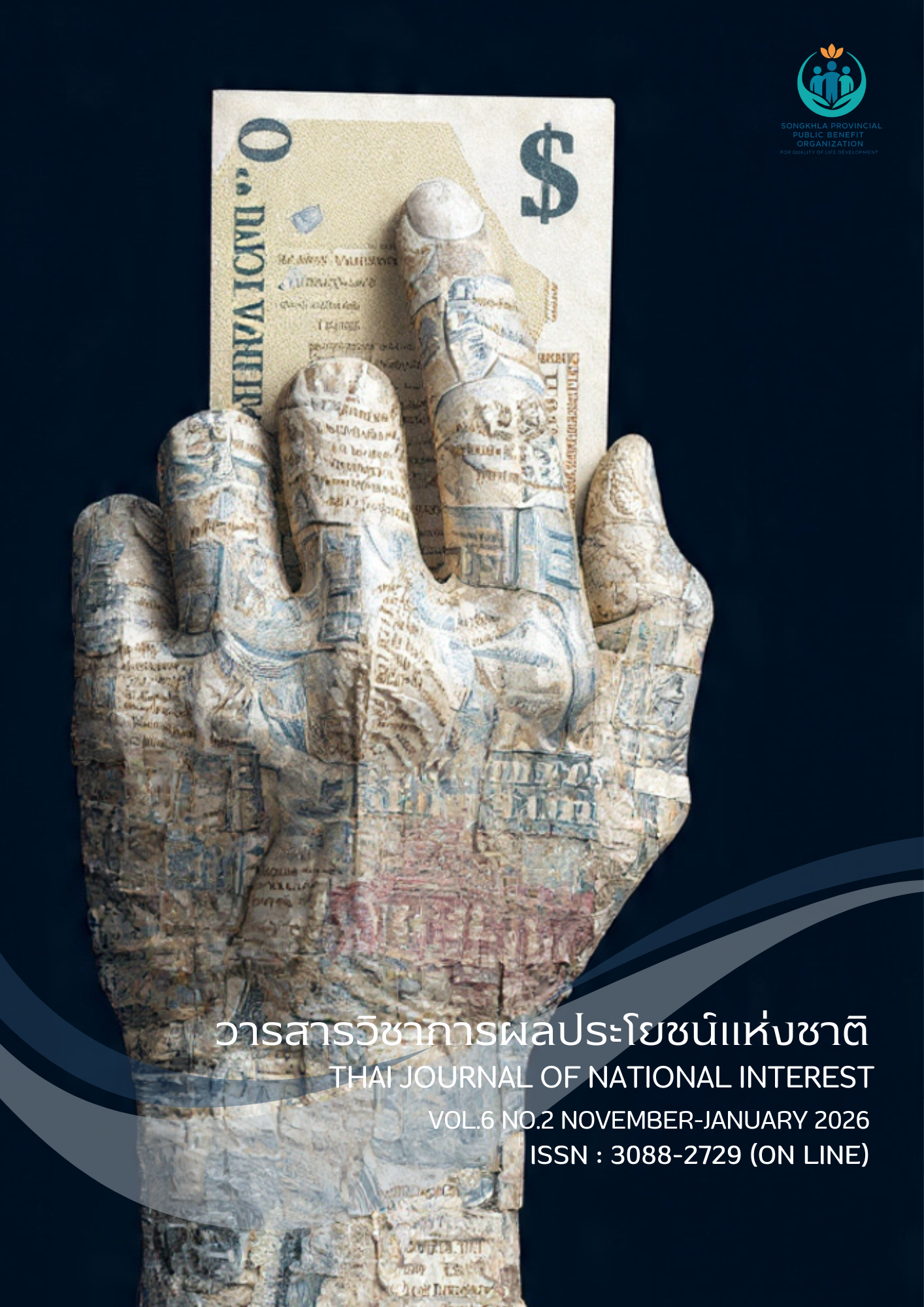
Main Article Content
Abstract
This article examines how financial sovereignty functions as a mechanism of regime adaptation in Russia, Belarus, and Kazakhstan from the 1990s to 2024. Using the framework of sovereign circuits and temporal sovereignty, the study situates financial strategies within broader questions of post-Soviet democratization. Russia’s response to sanctions illustrates how authoritarian resilience can be reinforced through sovereign reserves, ruble-based circuits, and temporal design of industrial policy. Belarus exemplifies proxy-sovereignty, relying on Russian subsidies and dual-circuit mechanisms that sustain regime stability but deepen dependency. Kazakhstan demonstrates a hybrid strategy, oscillating between external anchors and national industrial ambitions. The findings suggest that financial sovereignty is not merely an economic condition but a political resource: regimes use it to reconfigure dependency, extend planning horizons, and buffer external coercion. The article contributes to debates on authoritarian durability by showing how post-Soviet states re-engineer financial time and circuits as instruments of governance under global systemic constraints.
Article Details

This work is licensed under a Creative Commons Attribution-NonCommercial-NoDerivatives 4.0 International License.
Thai Journal of National Interest Academic Journal under Creative Commons Attribution-NonCommercial-NoDerivatives 4.0 International License The journal allows access or distribution of academic work without charge or registration. To support the exchange of knowledge Scope covers academic work in geopolitics. Geoeconomics and Innovation
Users can share, copy and distribute all information published in National Interest Academic Journal in any form or medium subject to the following conditions:
Citation — Permission to use, reproduce, distribute, or modify the work. But credit must be given to the owner of the work. If the work is used without credit, the name of the owner of the work will be Must obtain permission from the owner of the work first.
Noncommercial — The work may be used, reproduced, distributed, or modified. However, the work or article may not be used for commercial purposes.
Cannot be modified — The work may be used, reproduced, and distributed. But do not modify the work. unless permission is received from the owner of the work first
References
Åslund, A. (2007). How capitalism was built: The transformation of Central and Eastern Europe, Russia, and Central Asia. Cambridge University Press.
Central Bank of Russia. (n.d.). Annual Reports (1999–2024). https://www.cbr.ru/eng/publications/annual/
Connolly, R. (2018). Russia’s response to sanctions: How Western economic statecraft is reshaping political economy in Russia. Cambridge University Press.
Evans, P. (1995). Embedded autonomy: States and industrial transformation. Princeton University Press.
Eurasian Economic Union. (2023). Customs Statistics Annual Report 2010–2023. EAEU Secretariat.Author
Eurasian Economic Union. (2023). Macroeconomic review. EAEU Statistics Department. https://eec.eaeunion.org/en/
Eurasian Economic Union. (2023). Statistical Review of Trade and Transport. EAEU Statistics Department.
Fukuyama, F. (2013). The origins of political order. Farrar, Straus & Giroux.
Garriga, A. C. (2016). Central Bank Independence Dataset (v2.0). Inter-American Development Bank.
Glazyev, S. (2022). The last world war: The USA to move and lose. Kniga.
Hanson, P. (2010). The Russian economic crisis. Routledge.
Hudson, M. (2018) and forgive them their debts: Lending, foreclosure and redemption from Bronze Age finance to the Jubilee Year. ISLET.
International Monetary Fund. (2023). Direction of Trade Statistics (DOTS). https://data.imf.org
International Monetary Fund. (2024). Article IV Consultations: Russian Federation, Belarus, Kazakhstan. https://www.imf.org
International Monetary Fund. (2024). International Financial Statistics (IFS).IMF. https://data.imf.org
Khazin, M. (2019). The decline of the dollar empire and the end of the Pax Americana. Algorithm.
Lenin, V. I. (1916). Imperialism: The highest stage of capitalism. (1999 ed.). International Publishers.
Ioffe, G. (2004). Understanding Belarus: Economy and political landscape. Europe-Asia Studies, 56(1), 85–118.
Ioffe, G. (2021). Belarus: Sovereignty, economy, and Russia. Problems of Post-Communism, 68(4), 345–357.
Marples, D. (2014). Our glorious past: Lukashenka’s Belarus and the Great Patriotic War. Ibidem.
Ministry of Economic Development of the Russian Federation. (2023). Macroeconomic Forecast 2023–2026.
Ministry of Finance of the Republic of Kazakhstan. (2023). National Fund and Macroeconomic Policy Report.
National Bank of the Republic of Belarus. (2023). Monetary Policy Statement.
Pomfret, R. (2019). The Central Asian economies in the twenty-first century: Paving a new silk road. Princeton University Press.
Rutland, P. (2013). Neoliberalism and the Russian transition. Review of International Political Economy, 20(2), 332–362.
Satpayev, D., & Umbetaliyeva, T. (2015). The politics of Kazakhstan’s oil boom. Central Asian Survey, 34(1), 1–15.
Stiglitz, J. (2002). Globalization and its discontents. W.W. Norton.
Suwan-achariya, S. (2024). Temporal sovereignty and strategic time design. [Manuscript in preparation].
United Nations Conference on Trade and Development. (2023). UNCTADstat: FDI Statistics. https://unctadstat.unctad.org
Wedel, J. (2001). Collision and collusion: The strange case of Western aid to Eastern Europe. Palgrave.
Wilson, A. (2011). Belarus: The last European dictatorship. Yale University Press.
Wallerstein, I. (1974). The modern world-system. Academic Press.
World Bank. (2023). World Development Indicators (WDI). https://databank.worldbank.org/source/world-development-indicators
World Bank. (2024). Global Economic Prospects. https://www.worldbank.org/en/publication/global-economic-prospects
